Newsletter sponsorship has become one of the most direct ways for brands to reach engaged readers and for publishers to earn predictable revenue. Instead of chasing attention across crowded social feeds, advertisers place their message inside an email people actually opted in to receive. This guide breaks down how the format works in 2026: what it costs, how pricing is calculated, what high-performing placements look like, how to buy or sell them, and how to measure results now that open-rate tracking is no longer reliable.
Table of Contents
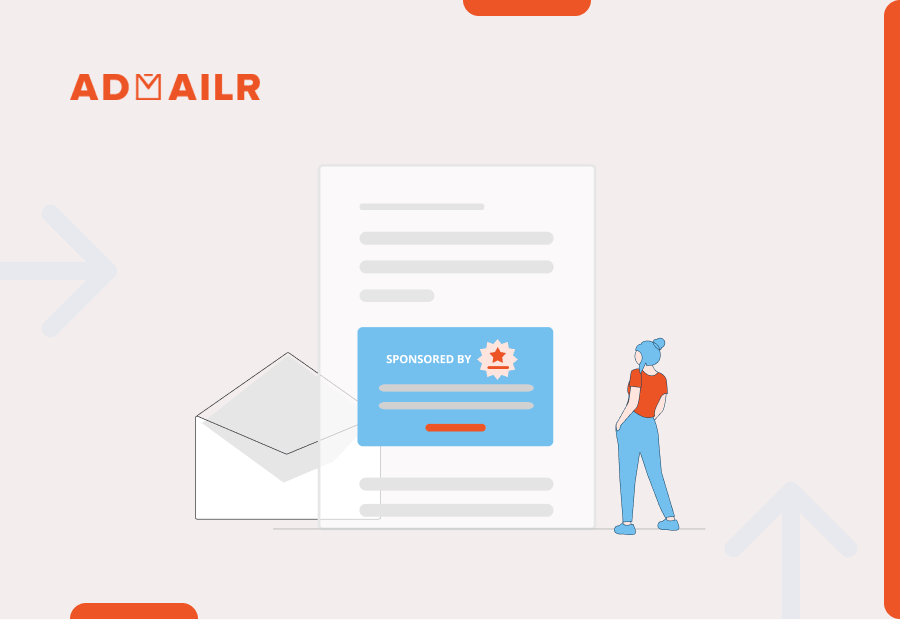
A newsletter sponsorship is a paid placement where a brand pays a publisher to feature its product, service, or message inside an email newsletter. The publisher owns the audience relationship. The advertiser rents access to it for a single send or an ongoing series.
Unlike display ads that follow readers around the web, a sponsorship lives inside content the reader chose to subscribe to. That opt-in context is why sponsored newsletter ads consistently earn stronger attention and trust than most programmatic channels.
Two things make the format work: relevance and permission. When the offer matches the audience, a sponsorship reads less like an ad and more like a useful recommendation.
Not every placement looks the same. The most common formats are:
Each format trades reach, attention, and cost differently. Top-of-issue placements command a premium because readers engage most before fatigue sets in. If you are planning where an ad should sit, our guide to newsletter ad placement explains how position affects both rates and performance.
Most placements are priced on CPM, the cost per thousand subscribers reached. The formula is simple: (rate ÷ 1,000) × subscribers. A newsletter with 20,000 subscribers charging a $30 CPM earns roughly $600 per placement.
CPMs vary widely by niche and audience quality. Based on current industry data, here are realistic 2026 ranges:
| Newsletter type | Typical CPM (2026) |
| General / consumer / lifestyle | $15–$35 |
| Marketing & media | $30–$50 |
| B2B, finance, SaaS, developer | $40–$80+ |
| Ultra-niche / executive audiences | $80–$120+ |
Two forces push rates up: niche specificity and engagement. A 3,000-subscriber fintech newsletter can out-earn a 30,000-subscriber general digest because its audience is harder to reach anywhere else. Dedicated sends sit outside these ranges and are usually priced at two to five times the primary placement rate. For a deeper breakdown by pricing model, see our full guide to newsletter advertising rates.
There is no single "correct" pricing model. Each fits a different goal:
A clear 2026 shift: more deals now blend models. Hybrid structures that pair a guaranteed base with a performance bonus are growing fast because they split risk fairly between both sides.
Apple Mail Privacy Protection changed how sponsorships get priced. Because Apple pre-loads email content through its own servers, tracking pixels fire whether or not a human opens the message. That inflates reported opens, sometimes dramatically.
The scale is hard to ignore. Litmus has tracked Apple Mail's share of tracked opens at roughly half the market since Mail Privacy Protection rolled out. When roughly half your "opens" may be automated, pricing a sponsorship purely on open rate is guesswork.
Smart advertisers and publishers have shifted to click-based metrics, which privacy protection does not affect. Clicks, conversions, and click-to-open trends now anchor serious sponsorship deals.
The best newsletter sponsorship examples share one trait: they feel native to the newsletter. A few formats that consistently perform:
The pattern across all of them: lead with reader value, disclose the partnership clearly, and give one obvious action.
If you are a brand or media buyer, here is how to run a sponsorship that pays back:
Start narrow. Two or three well-matched newsletters run consistently will teach you more than a dozen one-off placements.
If you own the audience, sponsorships are among the cleanest ways to monetize it. For the full step-by-step process, see our guide on how to sell newsletter ad space. The essentials:
The most valuable publishers are not always the biggest. A tight, engaged list with proven click performance often out-earns a bloated one.
Measure results by tracking what happens after the click, not the open. The core metrics:
For advertisers, email remains a standout channel. Research from Litmus and HubSpot puts the average email marketing ROI around $36 for every $1 spent. Sponsorships tap that same engaged-inbox advantage, but only when you A/B test creative, offers, and placement, and let the data pick winners.
Sponsored content carries legal obligations. In the United States, the FTC requires clear and conspicuous disclosure whenever a placement is paid. A small-print or vague label does not meet the standard; readers must be able to tell an ad is an ad.
A quick compliance checklist:
Compliance is not just risk management. Transparent, contextually relevant sponsorships perform better because readers trust them.
Running sponsorships well means solving hard problems: matching the right advertiser to the right audience, pricing fairly, measuring past the open, and keeping every placement compliant and brand-safe. Admailr is built to do exactly that. It is an email ad serving and monetization platform that connects advertisers and newsletter publishers through contextual, performance-first placements. Whether you are buying inbox attention or selling it, Admailr gives both sides one system to plan, run, and measure campaigns without the guesswork that has traditionally made sponsorships hard to scale.
Admailr treats a newsletter sponsorship as a measurable media buy, not a one-off favor. The platform serves ads contextually, matching each placement to newsletter content and audience intent, so advertisers reach readers in the right mindset and publishers keep their inbox relevant. Because Admailr is engineered for the post-open-rate era, reporting centers on the metrics that still tell the truth: delivered impressions, verified clicks, and downstream conversions. The result is fairer pricing, cleaner attribution, and campaigns you can actually optimize mid-flight instead of judging weeks after the send.
What that looks like in practice:
For brands and media buyers, Admailr turns sponsorship from a manual, relationship-by-relationship grind into a scalable acquisition channel. Instead of cold-emailing dozens of publishers and hoping the audience fits, you tap a vetted network of newsletters across B2B, technology, finance, marketing, and consumer niches. Contextual targeting places your message beside relevant content, native formatting keeps it from looking like a banner, and real-time reporting shows impressions, clicks, and conversions as they happen. That means you can shift budget toward top performers without renegotiating every individual deal, and you can prove return on ad spend with click-level data rather than vanity opens.
Ready to reach engaged, opted-in readers? Explore how to advertise in newsletters with Admailr and launch your first campaign with full performance transparency.
For publishers, Admailr turns your subscriber list into dependable revenue without compromising the reader experience. The platform fills more of your available inventory with relevant, contextually matched sponsors, prices placements against real engagement rather than inflated opens, and handles the ad serving, reporting, and payouts behind the scenes. You keep editorial control and reader trust while Admailr handles the demand and the mechanics. Because matching is contextual, the ads readers see feel like a natural fit for your content, which protects long-term engagement and keeps your rebooking rate high.
If you publish a newsletter, see how to monetize your newsletter with Admailr and start earning from inventory you are already sending.
As third-party cookies disappear, contextual targeting is how modern sponsorships stay effective. Admailr matches ads to the content and audience of each newsletter rather than tracking individuals across the web. Advertisers reach the right readers, publishers protect subscriber privacy, and both sides stay ahead of tightening regulation. It is targeting that gets more durable as the privacy landscape shifts, not less, which makes it a safer foundation for long-term campaigns.
Open rates broke; measurement did not have to. Admailr's reporting is built around signals that privacy features cannot distort. You see verified clicks, conversion events, and effective cost per result on a single dashboard, so advertisers know what they paid per outcome and publishers know which placements and formats earn the most. That shared, click-based source of truth removes the arguments that used to stall sponsorship deals and lets both sides optimize toward the same goal: real engagement that drives real revenue.
Most tools serve either the advertiser or the publisher. Admailr connects both in one place, which is why sponsorships run smoother end to end. Advertisers get vetted inventory, contextual matching, and transparent reporting. Publishers get filled inventory, fair pricing, and hands-off ad serving. Because both sides work inside the same system, campaigns launch faster, disputes shrink, and relationships turn into repeat business. For anyone serious about newsletter advertising in 2026, that unified, privacy-first infrastructure is the difference between a one-time placement and a channel you can rely on.
That single source of truth also compounds over time. Advertisers build a repeatable playbook: they learn which niches, formats, and offers convert, then reinvest budget where the click and conversion data points. Publishers build a stable revenue base: predictable demand, fair rates tied to real engagement, and reporting they can hand to sponsors without caveats. Instead of starting from scratch on every deal, both sides accumulate signal. Admailr keeps the mechanics, measurement, and compliance in the background so advertisers and publishers can focus on the one thing that grows sponsorship revenue: matching great offers to the right readers, issue after issue.
Newsletter sponsorship works because it puts a relevant message in front of an audience that chose to be there. In 2026, the winners are the ones who price from real engagement, measure past the open, disclose clearly, and match offers to readers with care. Whether you want to buy inbox attention or sell it, the mechanics are learnable and the returns are real. Admailr brings both sides together with contextual placement, privacy-safe measurement, and flexible pricing, so your next newsletter sponsorship is built to perform from the very first send.
1. What is a newsletter sponsorship? A newsletter sponsorship is a paid placement where a brand pays a publisher to feature its product or message inside an email newsletter. The publisher owns the audience; the advertiser rents access to it for one send or an ongoing series. Because readers opt in, sponsorships typically earn stronger attention and trust than most other paid channels.
2. What are the main types of newsletter sponsorships? The main types are dedicated emails, primary placements, inline native sections, classified text ads, and deeper integrations like sponsored series or takeovers. Dedicated sends give one advertiser the entire email and cost the most. Primary and inline placements sit within a regular issue. Each format balances reach, attention, and price differently.
3. How much should I charge for a newsletter sponsorship? Start with the CPM benchmark for your niche, then adjust for engagement. General and consumer newsletters typically run $15 to $35 CPM, while B2B, finance, and developer audiences command $40 to $80 or more. Multiply your CPM by subscribers divided by 1,000. Strong click performance and tight niche focus justify premiums above these ranges.
4. How much do sponsors pay per 1,000 subscribers? Sponsors usually pay between $15 and $80 or more per 1,000 subscribers, depending on niche and engagement. This CPM rate is lowest for broad consumer lists and highest for specialized B2B, finance, and technical audiences that are hard to reach elsewhere. Dedicated solo sends are priced separately, often at two to five times a standard placement.
5. What is a good CPM for a newsletter sponsorship? A good CPM depends on your niche: $15 to $35 is healthy for consumer newsletters, while $40 to $80 or more is realistic for B2B, finance, and developer audiences. Engagement matters more than size, so an open rate above 40% or a click rate above 5% can justify a meaningful premium. Ultra-specific executive audiences can exceed $100 CPM.
6. What is the easiest newsletter sponsorship to get? The easiest sponsorships to land are usually with smaller, niche-aligned brands that already target your exact audience. Affiliate and performance-based deals are also easier to secure because the advertiser's risk is low, since they pay mainly when readers convert. Building a simple media pack and showing real click data makes approval far faster.
7. How do I find newsletter sponsors? Find sponsors by identifying brands already advertising in newsletters your audience reads, then pitching the decision-makers directly. Research competing publications, note recurring advertisers, and reach out with a media pack that highlights your niche, engagement, and click performance. Contextual ad platforms can also match you with relevant advertisers automatically, removing most of the manual outreach.
8. How can I get sponsors for free? You can attract sponsors without paying for tools by building a clear media pack, publishing a public sponsorship page, and pitching aligned brands directly by email. Consistent publishing, honest engagement data, and a defined niche do most of the selling. Affiliate programs also let you monetize immediately with no upfront cost or platform fees.
9. What are common newsletter sponsorship mistakes? Common mistakes include pricing on inflated open rates, running mismatched offers, overloading issues with too many ads, and failing to disclose paid placements. Publishers also undervalue engaged niche lists, while advertisers spread budget too thin across one-off placements. The fix is matching offers to readers, measuring clicks, and testing a few newsletters consistently.
10. How many subscribers do you need to make $1,000 a month? It depends on your CPM and how often you run sponsorships. At a $30 CPM, a single placement to a 10,000-subscriber list earns about $300, so roughly three to four monthly placements reach $1,000. Highly engaged niche lists can hit that figure with far fewer subscribers by charging higher rates.
11. How much is a 1,000-person email list worth? A 1,000-person email list is worth roughly $15 to $80 per sponsored send, based on typical CPM ranges. Value climbs with engagement and niche specificity, so a small, targeted B2B list can be worth several times more than a broad consumer list of the same size. Repeat sponsorships and affiliate revenue increase lifetime value further.
12. How much does it cost to send 10,000 emails? Sending 10,000 emails usually costs very little, often just a few dollars to low double digits through most email service providers, depending on your plan and frequency. The larger costs are content creation and audience growth, not delivery. For monetized newsletters, that small sending cost is easily offset by even one sponsored placement.
13. Do you need an LLC to run a sponsored newsletter? No, you don't need an LLC to run a sponsored newsletter, but many creators form one as revenue grows. An LLC can offer liability protection and cleaner accounting once sponsorships become steady income. Consult a qualified accountant or attorney about your situation, since requirements and benefits vary by location and earnings.
14. Are newsletters still relevant in 2026? Yes, newsletters are highly relevant in 2026 and remain one of the highest-ROI marketing channels. Email delivers direct, permission-based access to engaged readers that social platforms can't match, and newsletter formats keep growing as audiences seek curated, trustworthy content. For advertisers, that engaged, opted-in inbox audience makes sponsorships especially effective.
15. How do I measure newsletter sponsorship ROI? Measure ROI by tracking what happens after the click, not the open. Use UTM tags and a dedicated landing page to attribute clicks, sign-ups, and sales, then divide total spend by conversions to find your cost per acquisition. Since privacy features inflate open data, clicks and conversions are the reliable signals of real performance.
16. Do sponsored newsletter ads need FTC disclosure? Yes, sponsored newsletter ads need clear and conspicuous disclosure under FTC guidelines whenever a placement is paid. The disclosure must be easy to notice and placed near the sponsored content, so vague labels or fine print don't qualify. Transparent disclosure also builds reader trust, which improves how sponsored placements actually perform.
17. Does Apple Mail Privacy Protection affect sponsorship pricing? Yes, Apple Mail Privacy Protection affects sponsorship pricing because it inflates reported open rates by pre-loading email content automatically. With Apple accounting for roughly half of tracked opens, pricing on opens alone is unreliable. Advertisers and publishers now anchor deals to click-based metrics and conversions, which privacy features don't distort.

